About this book
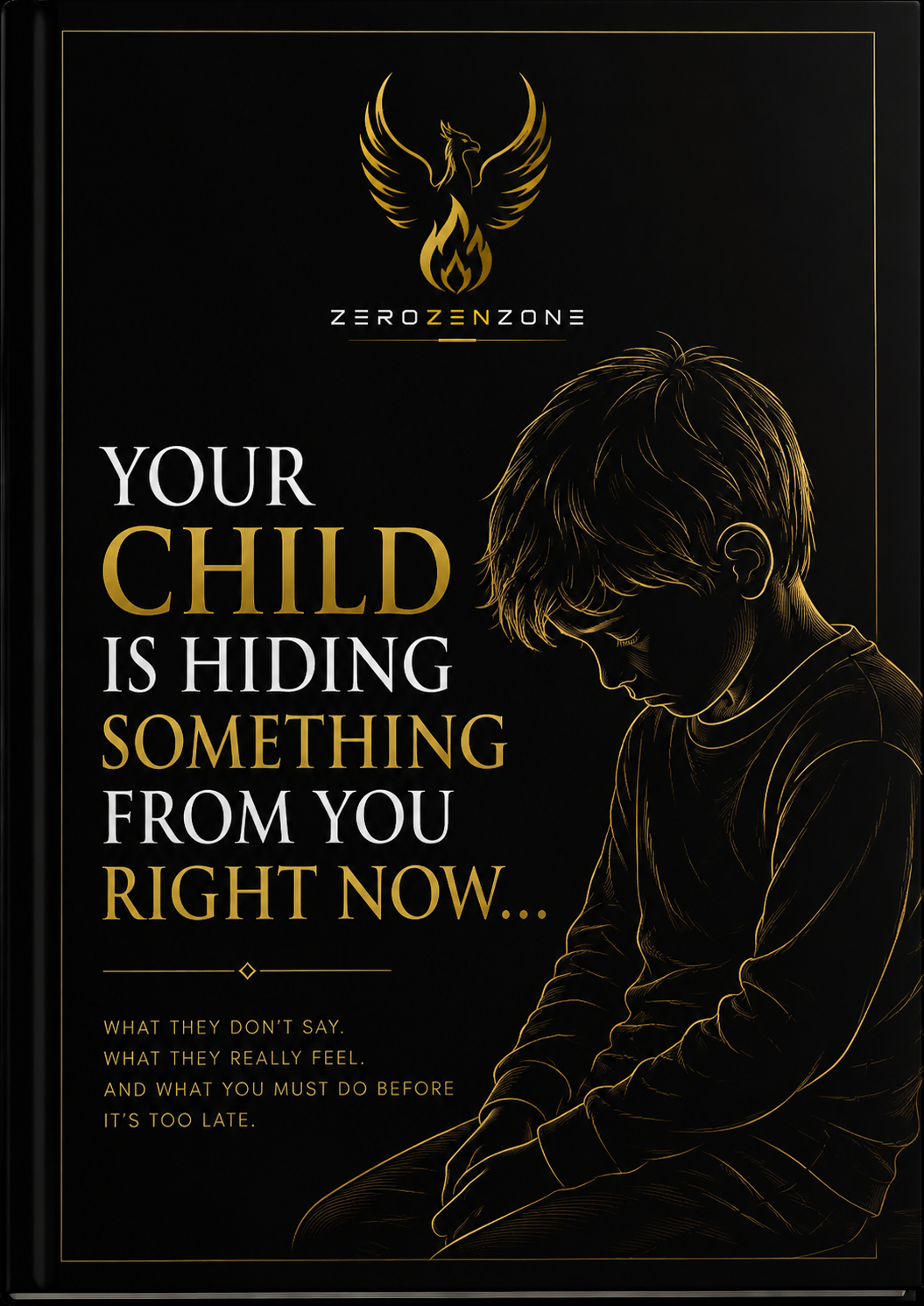
"I Swear I'd Never Do This to My Child" is a short, deeply personal parenting guide written by someone who was kicked out of his home at 16 over a misunderstanding his father never bothered to verify. That experience, and the eight months he spent surviving alone , became the foundation for everything the book teaches.
The core argument is simple: when children hide things from their parents, it's not because they're dishonest. It's because they were taught, through repeated moments of judgment, overreaction, and punishment for telling the truth, that being known isn't safe. The book calls this a system failure , not a child failure.
Rather than offering conventional parenting advice, it focuses on one thing: rebuilding the environment that makes a child feel safe enough to be honest. It draws on neuroscience (mirror neurons, the developing prefrontal cortex) and Islamic values around mercy and trust (Amanah) to explain why parents unconsciously repeat the patterns they were raised with , and how to break that cycle.
The practical core is a Daily Three-Action System , three 5–10 minute practices done every day:
• An open-ended conversation where you listen without fixing or judging
• A moment of undivided presence doing whatever your child wants
• Verification , asking before assuming whenever something concerns you
It also covers the three pillars these actions build (Trust, Awareness, Communication), five common mistakes that quietly destroy progress, and a realistic timeline for what change actually looks like , from the first small shifts in week one, to a fundamentally different relationship by the end of the first year.
The book closes on a striking idea: your child is a mirror. They don't become who you tell them to be. They become who they watch you be.
Frequently asked
My child is already a teenager, is it too late to apply this?
No. While the book emphasises ages 0–12 as the period children absorb patterns most powerfully, the daily three-action system is relationship repair as much as it is relationship building. A teenager who has been hiding things for years still has a nervous system that responds to consistent safety. The wall was built brick by brick, it can be rebuilt the same way. It will take longer, and the resistance may be stronger, but the direction is what matters.
What if I try this and my child still doesn't open up?
The book sets a clear expectation: week one brings small shifts, month one brings noticeable change, and month three is when it becomes undeniable. If things feel stuck, the most likely cause is one of the five mistakes, particularly judging while appearing to listen, or using presence as a hidden teaching moment. Children are extraordinarily sensitive to the gap between what a parent says and what their face and tone communicate. The system only works when the listening is genuinely curious, not performed.
I had a bad childhood too, how do I change patterns I don't even recognise in myself?
This is exactly the gap the book is designed to close. The author's own father wasn't a bad man, he simply had no alternative blueprint. Awareness is the first step the book offers, and it's treated as transformative on its own. Once you can see the pattern, the automatic reaction, the judgment before the question, you gain a split second of choice. That pause is where the cycle breaks. The daily check-in practice is partly designed to build that self-awareness over time.
Does this work if my co-parent isn't on board?
Yes, one consistent, safe parent can make a significant difference. Children don't need both adults to change simultaneously, they need one reliable person who listens without judgment, shows up with presence, and asks before assuming. If you become that person consistently, your child will find their way to you when it matters most, regardless of the dynamic elsewhere.
Is this approach too soft, won't my child lose respect for boundaries?
The book is careful to distinguish between safety and permissiveness. The verification action, for example, explicitly keeps consequences in place, it simply rewards the honesty first. The goal isn't a home without rules; it's a home where your child chooses to tell you the truth even knowing there may be a consequence. That kind of voluntary honesty requires far more character than obedience built on fear, and produces a fundamentally more trustworthy adult.